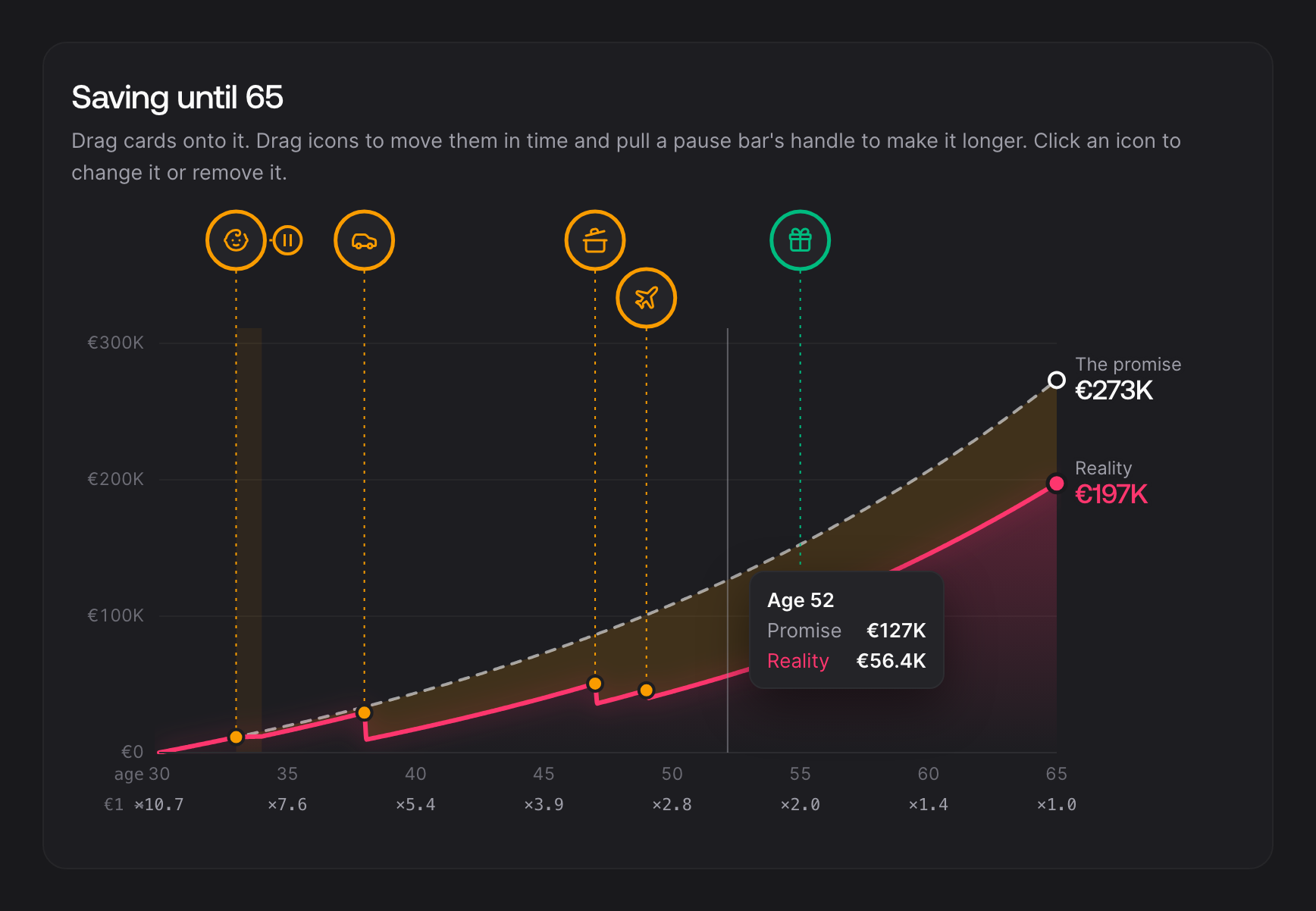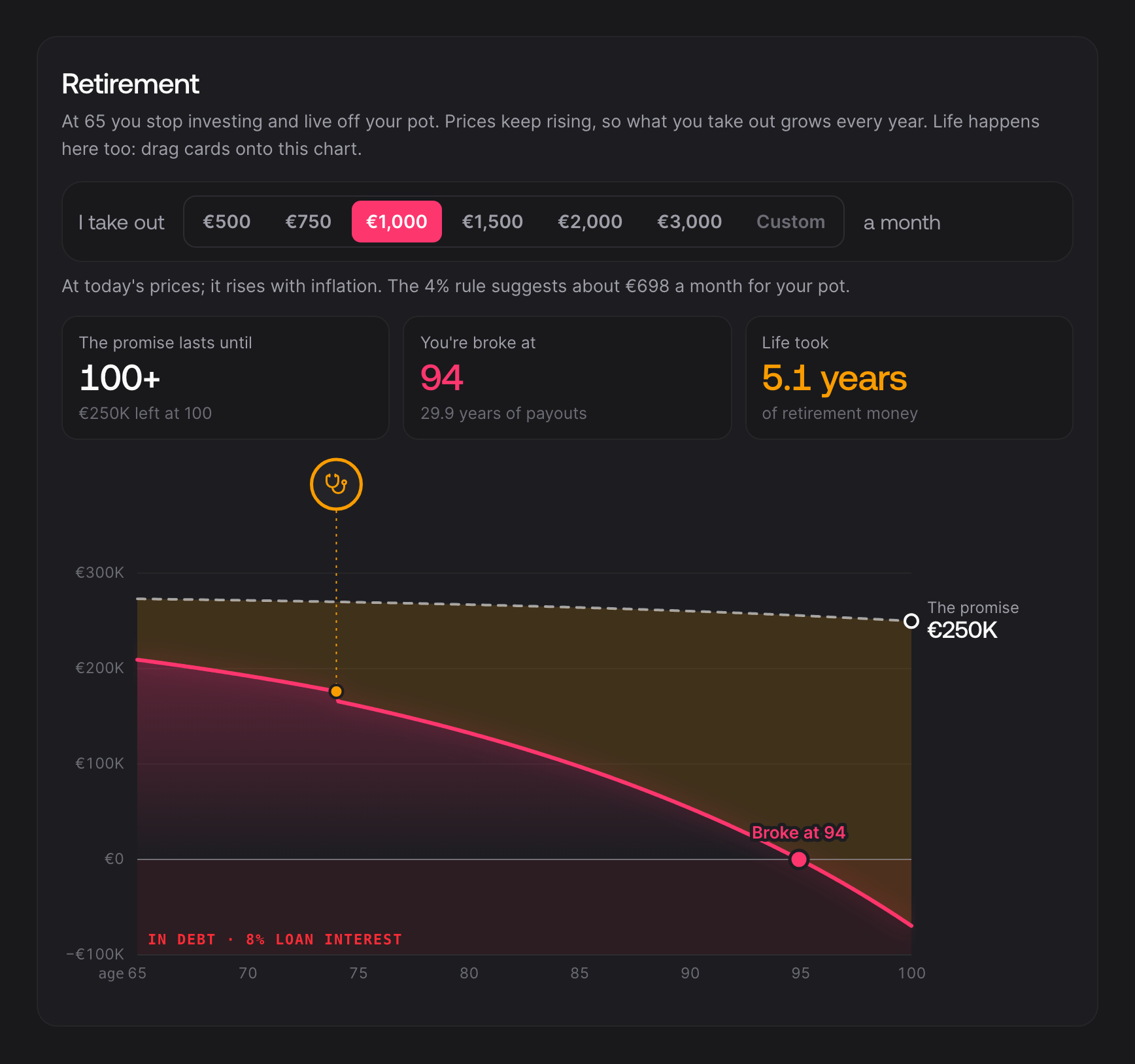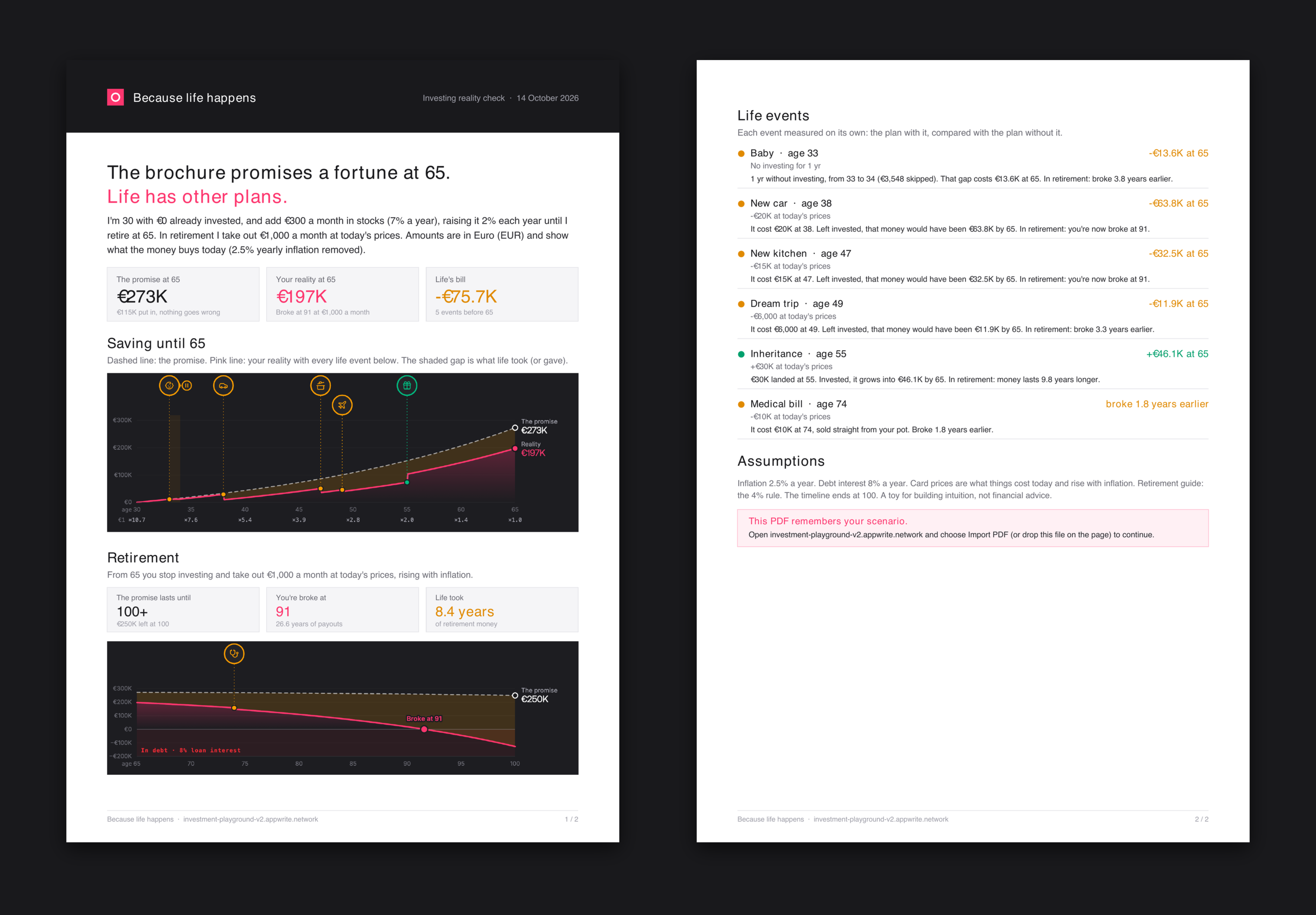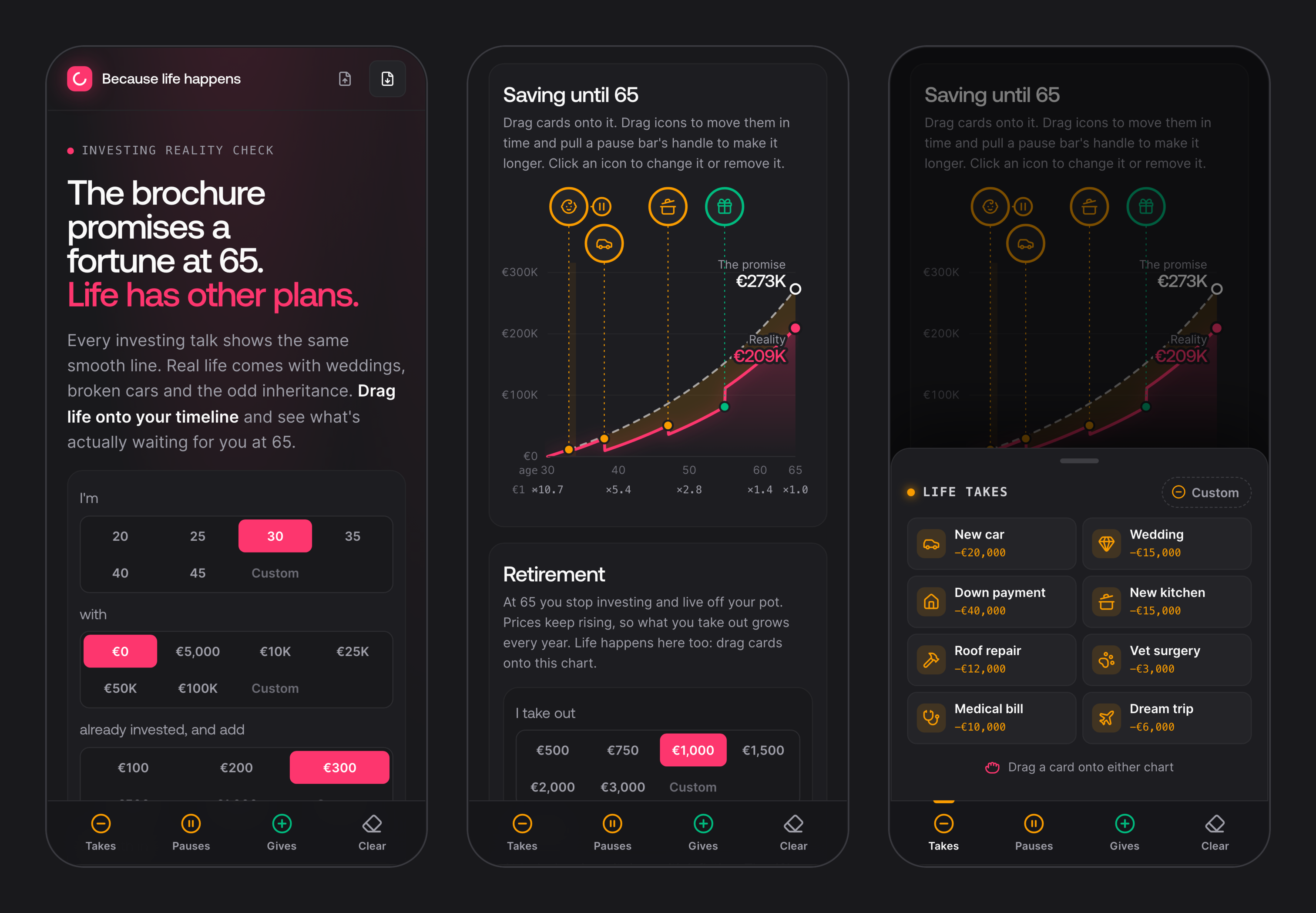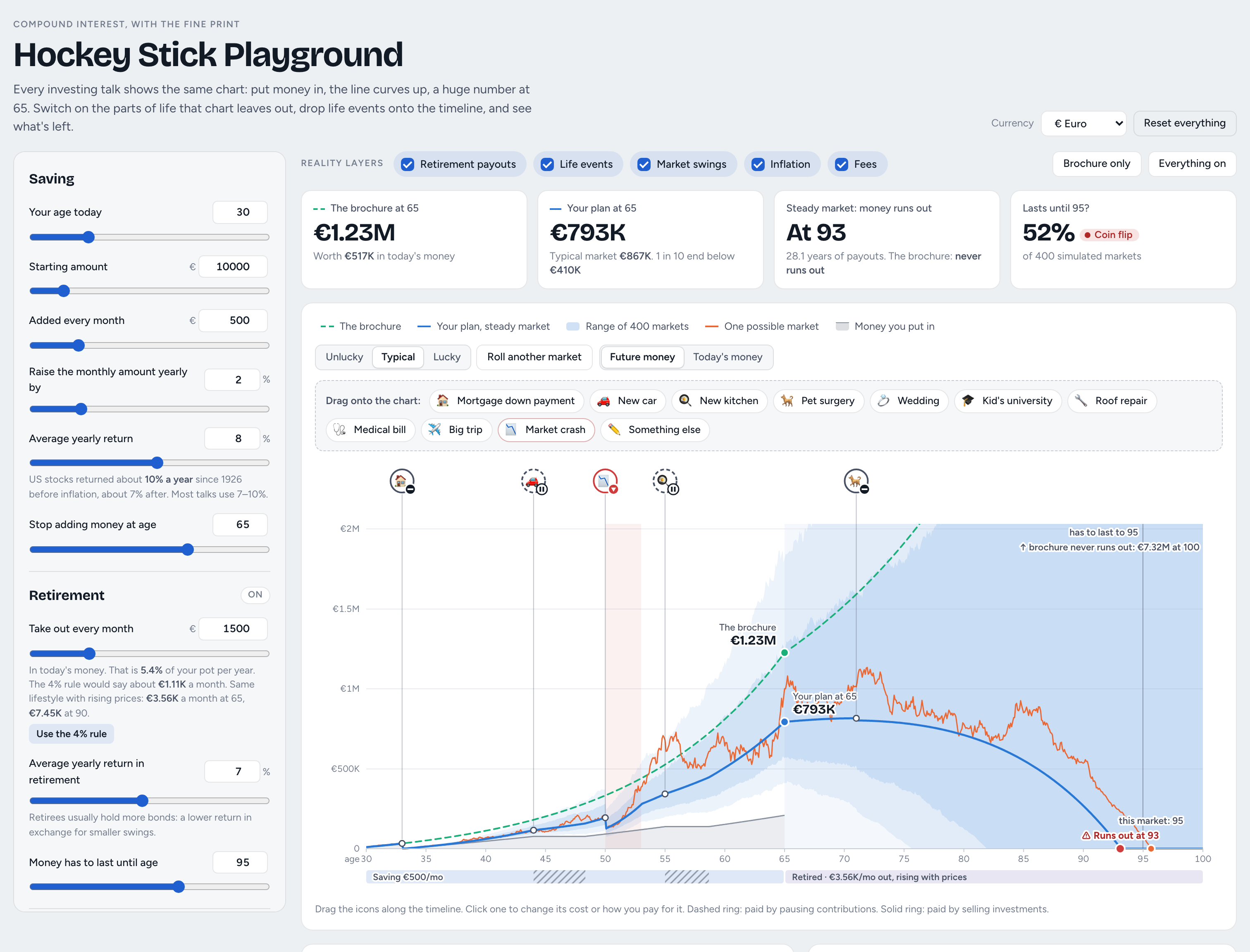
Investment products love to promise an early retirement. Their charts show compound interest turning a monthly deposit into a fortune by 60. I first saw this explained in a YouTube video with nice visuals, but I wanted to try it with my own numbers and the life I actually expect. That became Hockey Stick Playground, the first version of this project. It starts from the classic chart and lets you switch on what it leaves out: retirement payouts, life events, market swings, inflation, and fees.
The surprise is how much a few life events change the result. Compound interest works both ways: it multiplies the good years, but also every pause and every withdrawal. I also wanted to see the difference between the number on paper and what that money actually buys, and how raising the monthly deposit every year fights inflation.
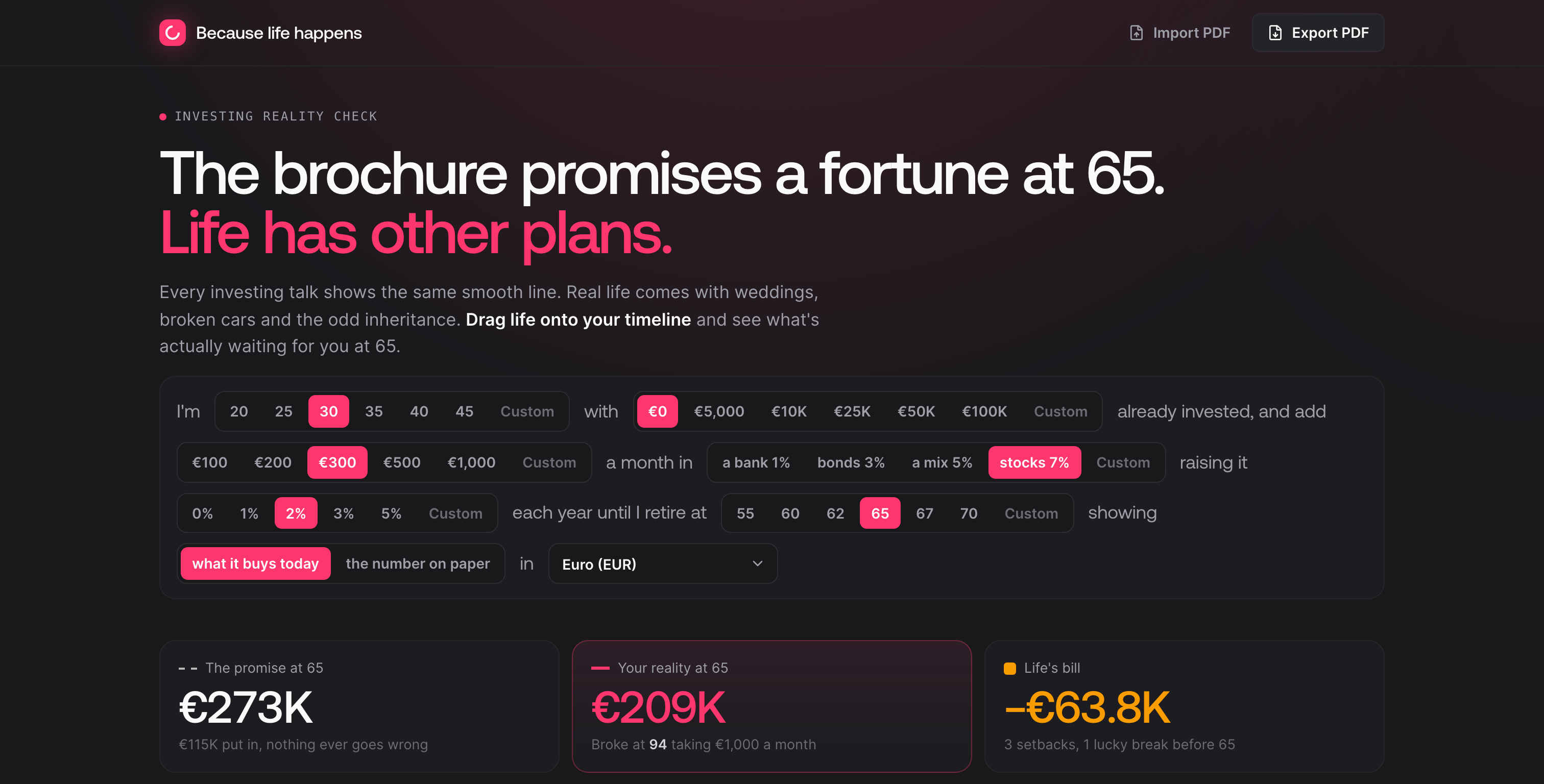
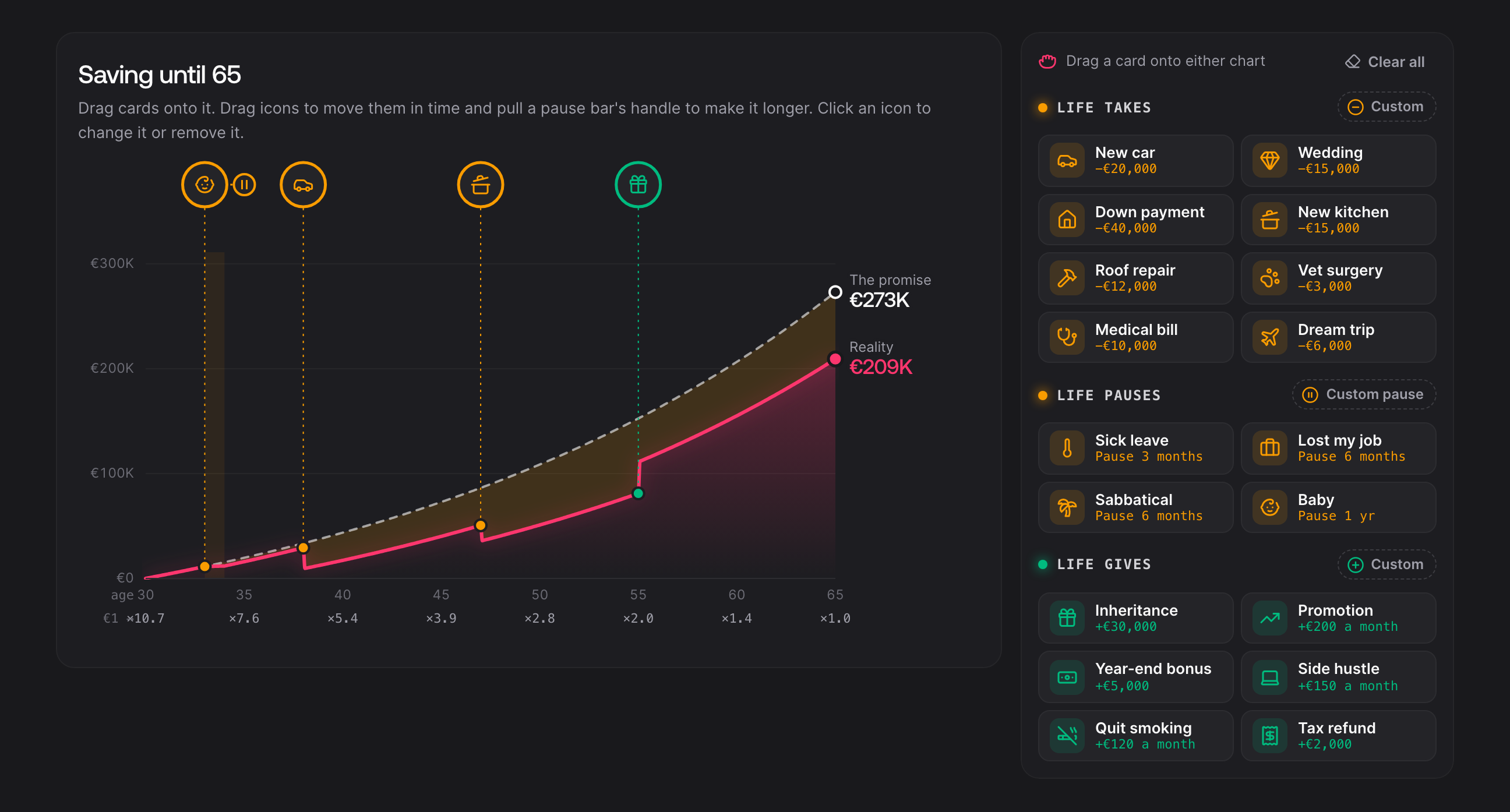
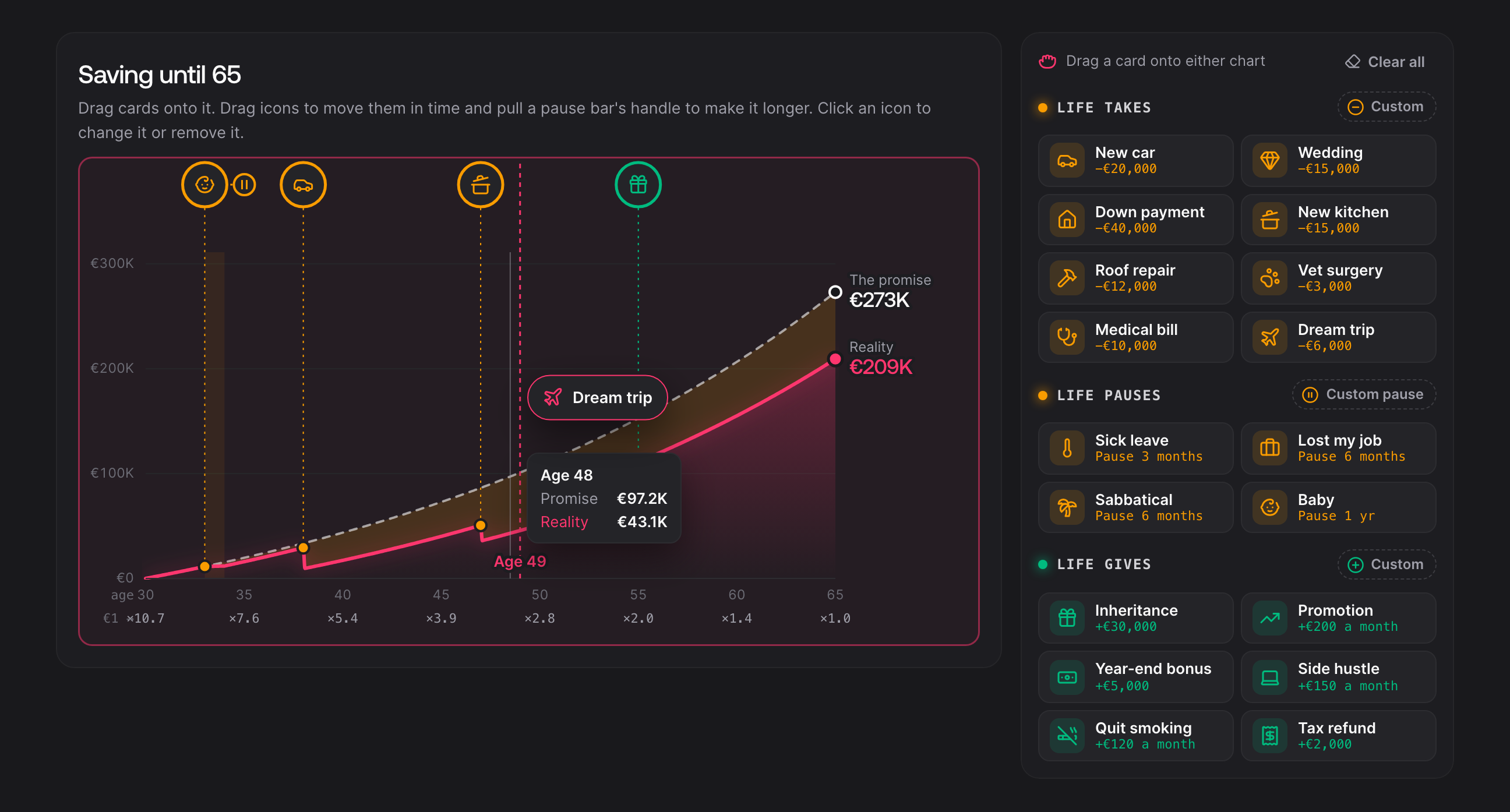
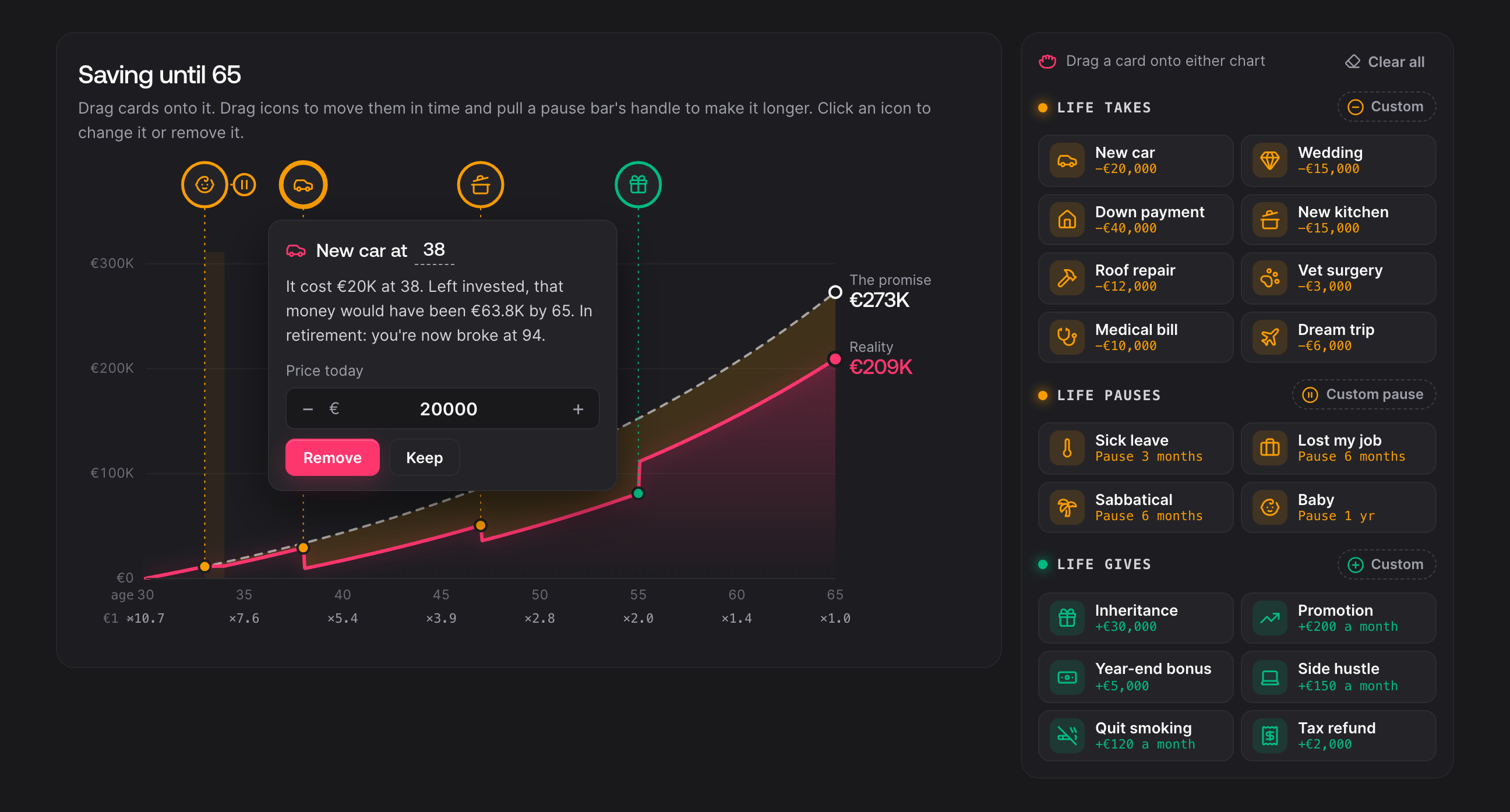
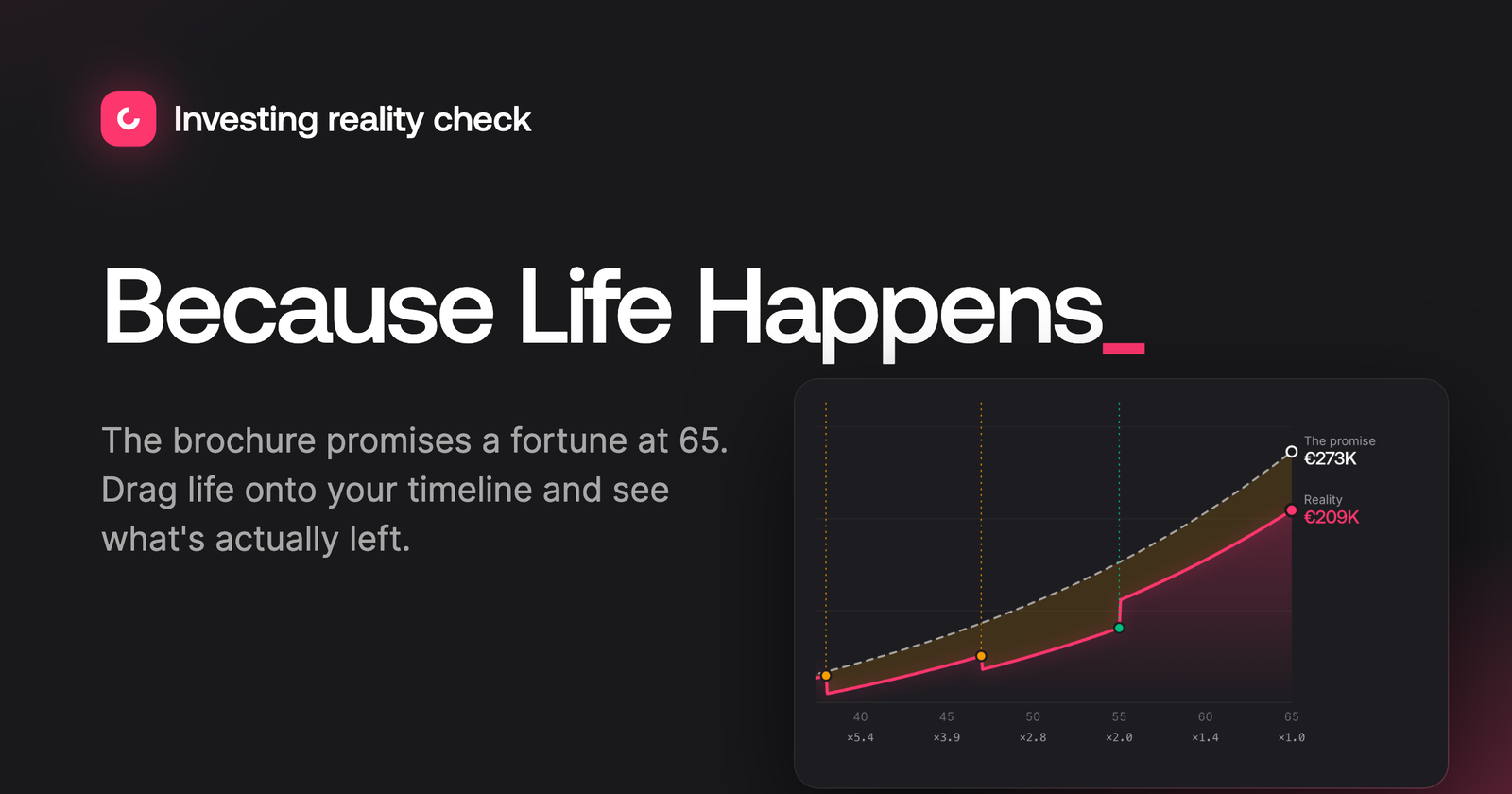
I was amazed the first time I saw those graphs, but my friends had a hard time playing with the first version. So the same day, I built Because Life Happens: a simpler, game-like take for anyone who wants to learn a bit about money. You describe your plan in one sentence, almost like telling a story, then drag life onto your timeline and see what a new car, a baby, a lost job, or an inheritance does to your money, before and during retirement. Hockey Stick Playground stays online for active investors and learners who want every setting.
Building it taught me that steady investing is the key, and that the best goal is not touching the money until retirement, so saving for a house or a car should happen outside the portfolio. Saving small amounts early barely moves your net worth, but it builds the habit. The numbers are rough on purpose: an agent picked them by researching live markets and how investment products are marketed, and different currencies would give different returns. It’s a tool for intuition, not financial advice.
I shared it with colleagues on Discord, and a few found it really interesting. I want to keep it simple and use it when I talk to people about money, because the visuals make the idea easy to understand.